Two products dominate almost every flooring conversation in Greater Seattle right now, luxury vinyl plank and hardwood. Both are beautiful and durable. Which should you choose? Ultimately, it comes down to your home, your lifestyle and where you’re installing them.
At Nielsen Brothers Flooring, we’ve been helping homeowners throughout Lynnwood, Edmonds and the Greater Seattle area navigate this decision for generations. Let’s have a conversation. We will talk about what each option does well, where each falls short and how to think through the choice for your specific situation.
What is Luxury Vinyl Plank (LVP)?
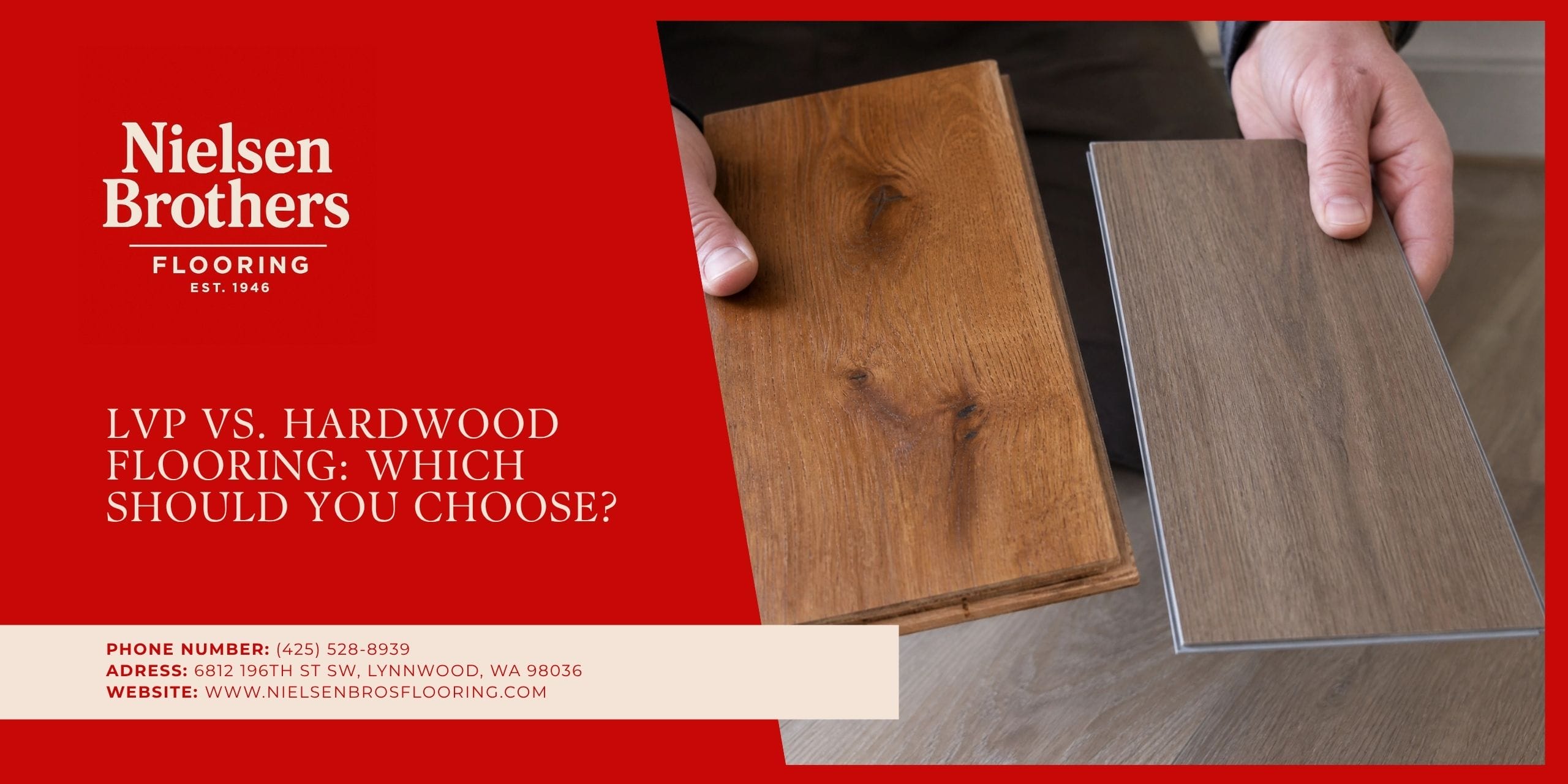
Luxury vinyl plank (LVP) is a synthetic flooring product that looks like hardwood. It’s best known for its layered construction. Each plank is made up of a rigid core, a high-resolution image layer that looks like wood grain and a wear layer on top that keeps it safe from scratches, scuffs and daily wear. Plus, its waterproof core keeps moisture out, but standing water shouldn’t be left as it can damage the subfloor.
LVP is becoming increasingly popular in the Pacific Northwest. Why? It works in spaces that are hard on natural materials and modern manufacturing makes it difficult to tell apart from real hardwood.
What is Hardwood Flooring?
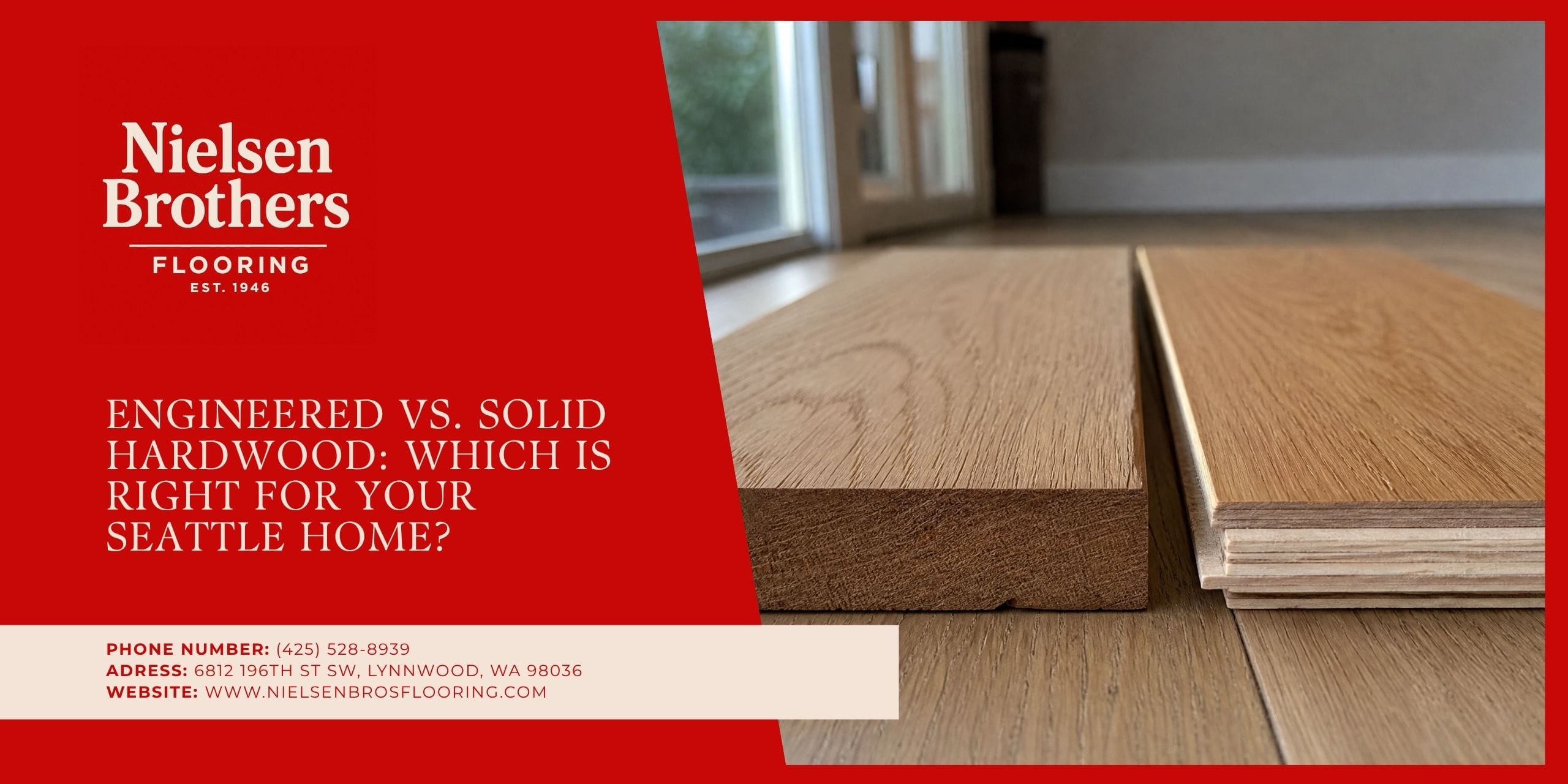
Hardwood flooring consists of real wood planks milled from species like oak, maple, hickory or Brazilian cherry. They can be installed as solid planks or as an engineered product with a real wood veneer over a stable plywood core. As one of the oldest and most proven flooring materials around, hardwood can last for generations in the right conditions.
Solid hardwood can be sanded and refinished multiple times over its lifetime so a well-maintained floor installed today can stay in your home for 50 to 100 years. Engineered hardwood looks similar, but provides more dimensional stability, which is great for areas with fluctuating humidity.
The Big Differences Between LVP and Hardwood
While they may look similar, LVP and hardwood flooring are not the same. Here are the big differences between the two explained:
Moisture and Pacific Northwest Factor
This is the part where the conversation gets real for Greater Seattle homeowners.
We live in one of the most moisture-prone regions of the country. Older homes in Edmonds, Seattle and Lynnwood often have subfloors that have been exposed to decades of humidity, seasonal movement and in other cases, water intrusion. Condos in older Edmonds buildings sit on concrete subfloors, shift and settle.
LVP has the advantage of a waterproof core. That prevents surface moisture like spills, tracked-in rain and pet accidents from damaging the plank. In kitchens, bathrooms, basements and rooms where water is a regular presence, it’s more practical than hardwood.
There is something to note about waterproof floors. Although they are waterproof, your baseboards, drywall, subfloor and belongings aren’t. A waterproof floor is important, but will only take you so far.
In other words, the term “waterproof” isn’t a license to let water sit. It’s only one layer of protection in a system that needs proper installation, subfloor mitigation and common-sense maintenance.
Solid hardwood is vulnerable to moisture. It expands and contracts with humidity changes so proper acclimation and perimeter clearances during installation are essential. In prepped space with controlled moisture levels, solid hardwood performs beautifully. In a damp basement or a poorly sealed subfloor, it may buckle, gap or cup over time.
Engineered hardwood lands in the middle. Its layers make it more dimensionally stable than solid hardwood because of its plywood core, but isn’t fully waterproof. In the main living areas of the Pacific Northwest, engineered hardwood is generally the better call over a solid.
Durability and Longevity
Both flooring products are durable, but age differently.
A quality LVP floor with a thick wear layer stands up to scratches, pets and high-traffic areas for 15 to 25 years. However, when it wears, it does need to be replaced. There’s no way to sand or refinish it.
Hardwood flooring is built to last, but it is more prone to scratching or denting than LVP, especially soft species like pine. When wear becomes noticeable, it’s time to sand and refinish. That process can be repeated multiple times and is the reason hardwood can last a century or more.
If long-term value and the ability to change the look of your floors over time matters, hardwood has an edge. For families looking for flooring that handles everyday life, LVP makes more sense.
Maintenance
If you prefer a low-maintenance floor, LVP is best. Regular sweeping and occasional damp mopping will keep it looking its best. There’s no need for special cleaning products or risk of water damage from a damp mop.
Hardwood flooring needs more care. Never use steam mops or excessive water. A dry or lightly damp mop with hardwood-specific cleaner minimizes moisture and is the best approach.
The reality is both products aren’t difficult to maintain when you understand what they need. Hardwood flooring has a learning curve, but it’s mainly unlearning habits that work fine on other surfaces.
The Installation
Put simply, neither LVP nor hardwood has a simple plug-and-play installation.
LVP needs proper subfloor prep. Self-leveling is common in older Edmonds or Seattle-area homes where subfloors have been settling for decades and need significant leveling work. Skip that step and the floor will show every imperfection beneath it and installation won’t last.
Hardwood needs time to acclimate to your home before installation day. Precise perimeter clearances and a crew that doesn’t rush between jobs is also essential. An inexperienced crew installing a hardwood floor in a space without the proper humidity levels will cause it to buckle, gap and fail before it should.
It’s one of the main reasons to avoid DIY installs. The floor you see in the showroom is simple. What happens underneath is where the quality lives or dies.
Value and Aesthetics
Whether you choose LVP or hardwood, you’re adding value to your home. They just do so in different ways.
LVP is practical because its durable, low-maintenance, moisture-resistant surface appeals to buyers who want function. Also because it looks so much like hardwood, it photographs well and looks impressive in a listing.
Hardwood brings enduring value to any home. It’s a sign of quality, permanence and craftsmanship for buyers who understand what they’re looking at. A hardwood floor that’s well-maintained and refinished over years can become a selling point in its own right.
Homeowners investing in a forever home prefer a long-term choice like hardwood. In contrast, those wanting a high-performing floor at a more affordable price or installing in moisture-prone areas prefer LVP.
Which Should You Choose?
There’s no universal answer. The right option for you depends on your home, lifestyle and room. Here’s an overview:
Choose LVP if:
- You’re installing in a kitchen, bathroom, basement or any space with regular moisture exposure
- You have pets or young children and want durable floors that are easy to maintain
- You’re adding flooring to an older home where subfloor leveling is likely and you want to keep costs manageable
- You want a hardwood look at a more accessible price point
Choose hardwood if:
- You’re investing in a home you plan to own for decades
- You want a floor that can be refinished and updated over time
- You’re installing in living rooms, dining rooms or bedrooms where moisture isn’t a concern
- Resale value and authentic character of real wood are important
Choose engineered hardwood if:
- You love the look of real hardwood, but live in a home with variable humidity
- You’re installing on or below grade where solid hardwood isn’t recommended
- You want the refinishing potential of hardwood with greater dimensional stability
What is the Nielsen Brothers Perspective?
After installing both products in Greater Seattle homes, our answer is neither LVP nor hardwood is better. At Nielsen Brothers Flooring, we want you to choose the floor that fits your home, your family and how you live. We encourage you to make an informed decision, which includes knowing your subfloor and never underestimating the importance of proper installation.
Ready to find the perfect floor for your home? Contact us to schedule a free in-home consultation!